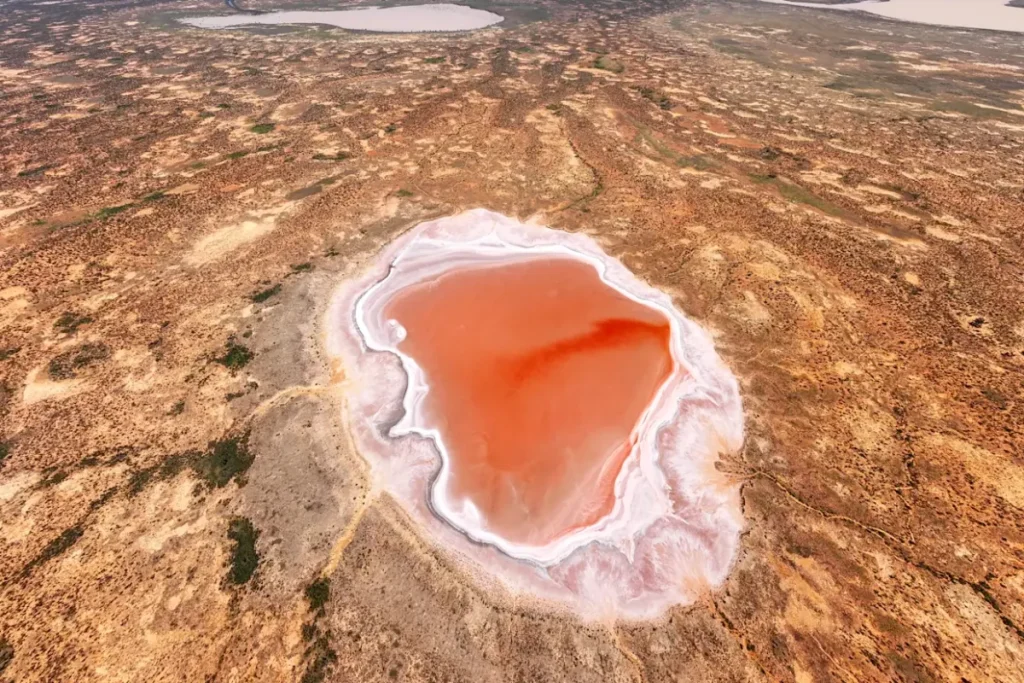

NSW is home to some extraordinary natural wonders, from dazzling white sand beaches and ancient rainforests to dramatic canyons and vast stretches of untouched wilderness. But one natural phenomenon remains relatively rare in the state: pink lakes. Now, two of these unusual natural landmarks, tucked away in the remote outback near Broken Hill, are set to receive greater protection following a major land acquisition announced on October 8. The lakes will become the first of their kind to be included in the NSW national parks estate, alongside an extensive landscape of sand dunes, wetlands and native vegetation. The announcement also opens up the possibility of public access to an area that has remained largely unfamiliar to visitors, with plans for walking trails, camping facilities and scenic drives being considered for the future.
Inside NSW’s newest national parks acquisition
The lakes are located on Pulgamurtie Station, a sprawling property around 235 kilometres north-east of Broken Hill, along the Silver City Highway. The NSW and federal governments have jointly purchased the station, adding more than 74,000 hectares to the state’s protected land network. The property encompasses a varied outback landscape, with large stretches of arid plains giving way to seasonal wetlands and lakes that support an impressive range of wildlife.
The lakes’ unusual colouring comes from microscopic organisms, including certain algae and bacteria, that flourish in highly saline water. These organisms produce pigments that can give the water its distinctive pink appearance, although the intensity of the colour can vary with environmental conditions. Pink lakes are uncommon in NSW, and many are seasonal, making the protection of these two particularly significant.
Pulgamurtie provides habitat for more than 70 threatened species, including the brolga, pink cockatoo and slender darling pea. Its wetlands also attract thousands of waterbirds, including migratory species travelling between Australia and parts of Asia. NSW Environment Minister Penny Sharpe described the acquisition as a major opportunity for both conservation and tourism, saying: “This is a once-in-a-generation conservation and tourism opportunity that will protect these spectacular landscapes and allow more people to experience them.”
For visitors, the longer-term plans could include camping near the larger lakes, designated picnic and day-use areas, walking tracks and scenic drives. Birdwatching and views towards the Koonenberry Range are also among the possibilities being explored. However, no opening date has been announced, and ecological and cultural heritage assessments will take place before further updates.