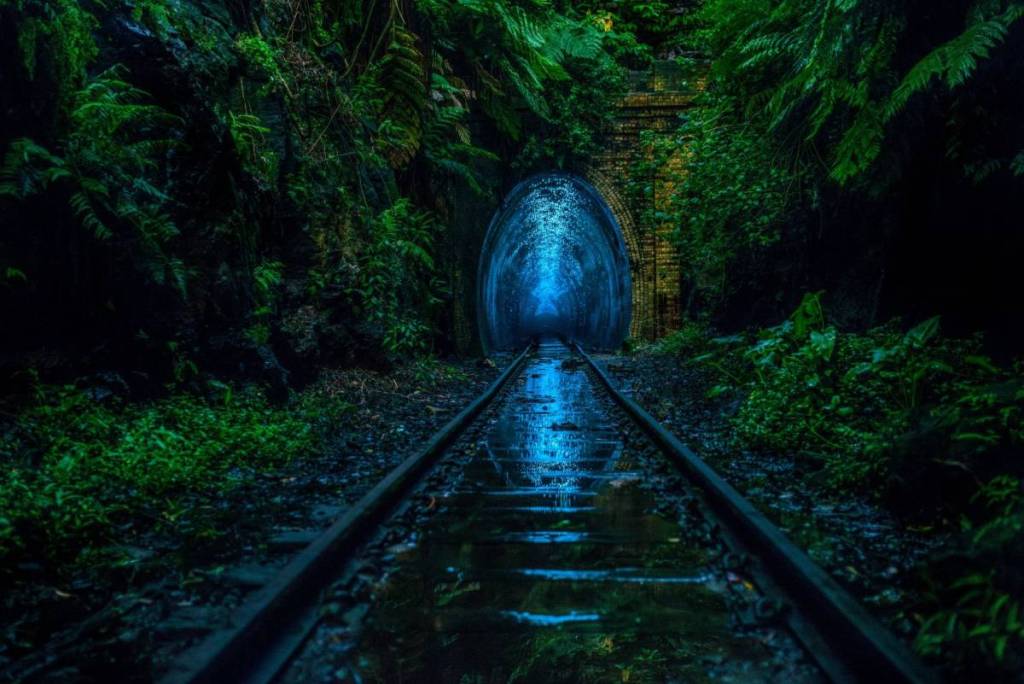

Step into a disused Illawarra railway tunnel where a century-old coal route has become home to one of NSW’s most magical glow worm colonies. Sydney has plenty of hidden history, but few places have transformed as dramatically as Helensburgh’s Metropolitan Tunnel.
Built in the late 19th century to serve the region’s coal industry, the disused rail tunnel now shelters a colony of glow worms that turn its dark, damp interior into an underground galaxy. Today, the site is better known as the Helensburgh Glow Worm Tunnel.
Long before the blue-green glow became its defining feature, the tunnel echoed with steam trains and coal wagons, serving a railway station that has since faded into history. Its transformation spans more than 130 years, with a fascinating story behind how it all came to be. Here’s what you need to know.
How Helensburgh’s tunnel served the coal industry
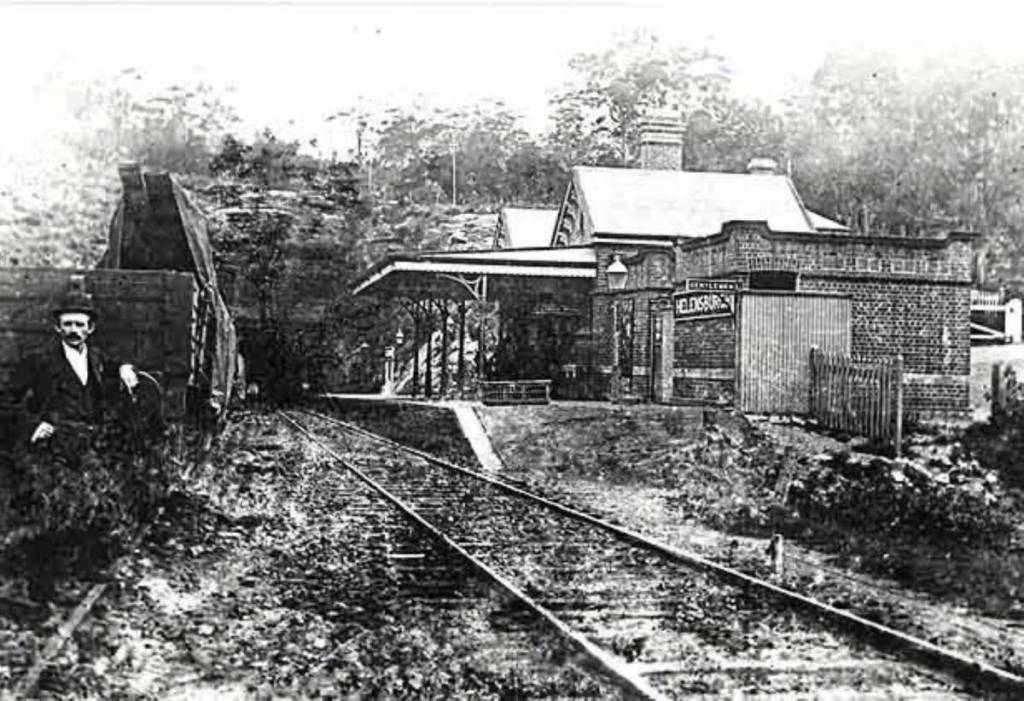
The Metropolitan Tunnel opened on 1st January 1889 as part of Helensburgh’s original railway station. The station sat between two single-line tunnels: the shorter Helensburgh Tunnel and the much longer Metropolitan Tunnel, which stretched for around 624 metres.
The longer tunnel connected the nearby Metropolitan Colliery to Helensburgh station, helping move coal uphill so it could continue its journey north. For more than 25 years, trains travelled through the brick-lined passage as Helensburgh grew around the Illawarra coal trade.
The railway line’s duplication and diversion brought its working life to an end in 1915. The original station and both tunnels closed, leaving the Metropolitan Tunnel without trains for the first time.
From railway tunnel to water reservoir
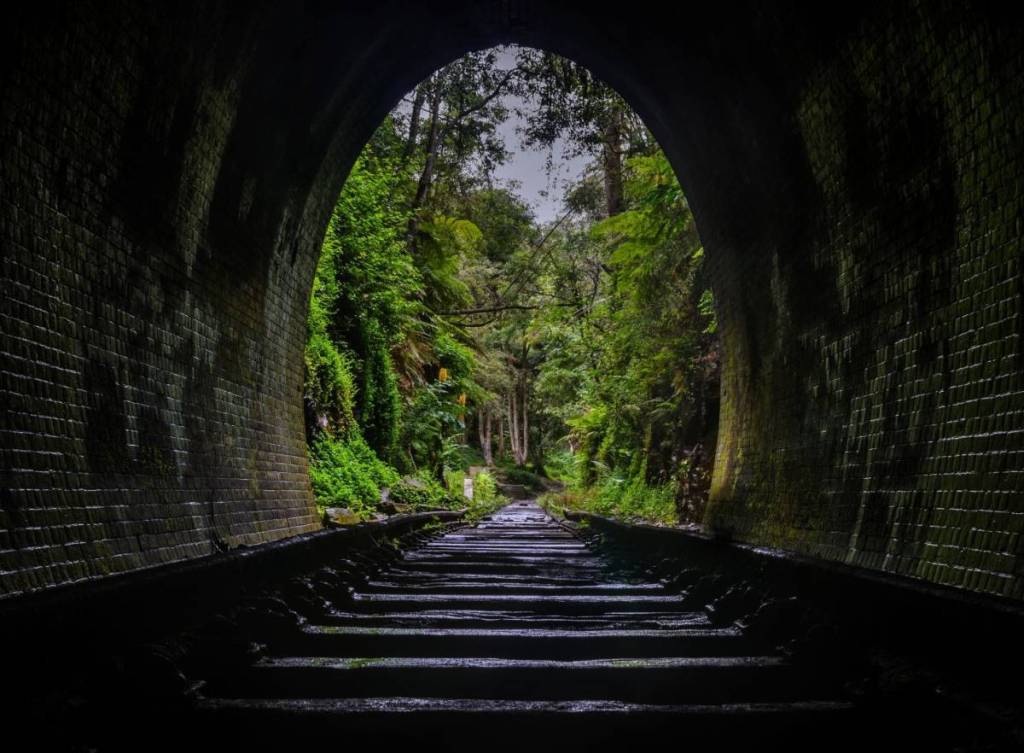
The tunnel soon found a second use. In 1928, the Metropolitan Colliery converted it into a water reservoir for mining operations, with a concrete plug installed at the southern end to control the water flowing in from the north.
For decades, the tunnel remained flooded and largely hidden. Rubble buried its eastern exit, while vegetation slowly overtook the entrance and the remains of the old railway station.
That began to change in 1995, when the colliery cleared debris from the northern entrance and drained the tunnel. The work uncovered remarkably intact remnants of Helensburgh’s first railway station, bringing renewed attention to the site’s industrial past.
The tunnel that now glows at night
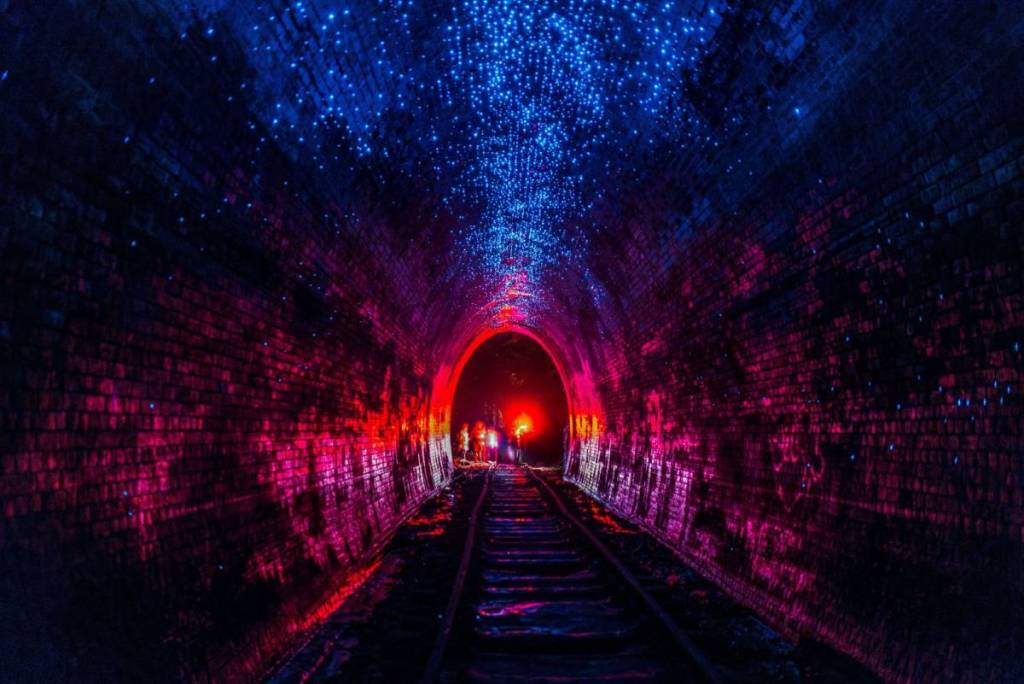
However, today, the Metropolitan Tunnel is famous for a very different reason. Its dark, humid conditions have become ideal habitat for glow worms, whose tiny blue-green lights line the tunnel’s ceiling and walls.
The effect is particularly magical after dark, when the old rail passage is transformed from a relic of Sydney’s coal-mining past into what feels like a cavern illuminated by a sky full of stars.
In 2001, Helensburgh Landcare received a Centenary of Federation grant to help develop the site as a historical attraction, protecting both its railway heritage and its unusual natural resident.
It’s a fascinating example of adaptive reuse, with a tunnel once built to transport coal now drawing visitors to witness one of nature’s most understated light displays.
Visiting Helensburgh Glow Worm Tunnel
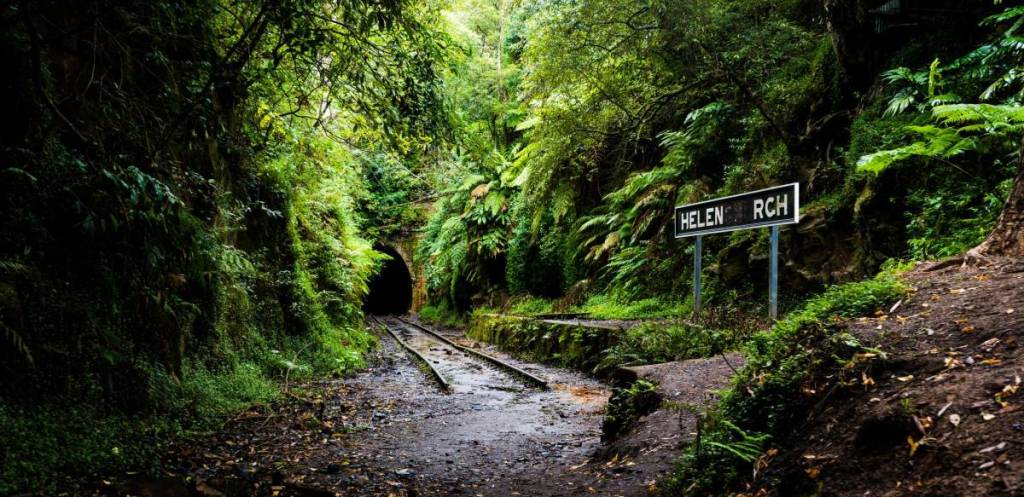
The tunnel is located near the intersection of Vera Street and Old Station Road in Helensburgh, around 200 metres from Helensburgh train station. You can visit at any time, day or night, but expect wet, muddy and slippery ground, so make sure you wear sturdy, waterproof shoes.
Bring a torch, but use it carefully. Direct white light and camera flashes can cause glow worms to switch off their lights, so a red-light filter is the best option. Keep noise to a minimum, stay on the path and avoid smoking or vaping near the entrance to help protect the fragile colony.
Allow around 20 to 30 minutes for a visit, or longer if you want to soak up the atmosphere.