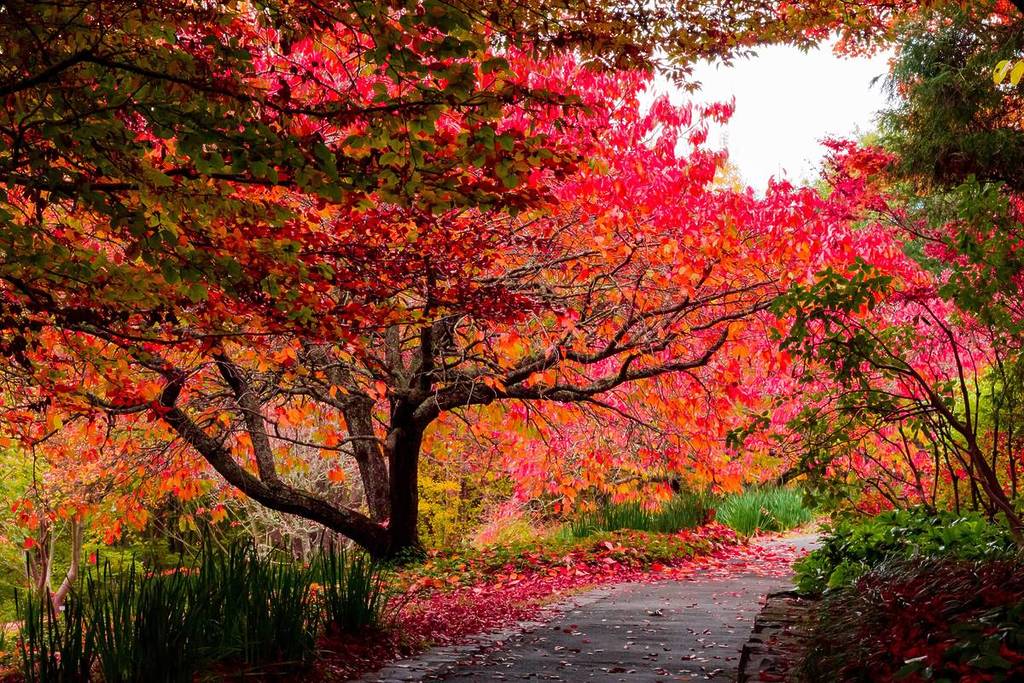

NSW national parks certainly come into their own in summer, with unlimited opportunity for beach camping, walking trails, and wild views. Autumn, however, can be just as appealing, particularly for those after cooler weather, quieter walking trails, changing colour and a slower pace. The Blue Mountains National Park is the obvious heavyweight here, consistently seeing more foot traffic than any of the other 200-plus parks across the state. It helps that it sits just a stone’s throw from the Sydney CBD, but the sheer scale — over 260,000 hectares —means there’s always something new to discover. In autumn, the park is at its most comfortable season for exploring with a mix of vibrant foliage, manicured heritage gardens, and rugged wilderness, all framed by charming small towns that dot the region. Here’s how to make the most of an autumn trip to the Blue Mountains National Park.
PLEASE NOTE: Mount Wilson Road is currently closed to general traffic until further notice, check the latest updates here before planning a trip.
Things to do in Blue Mountains National Park in autumn
Autumn is the ideal time to head toward the Blackheath and Katoomba areas of the park, where the elevation brings out the best of the season. At this time of year, the air is crisp enough for the more challenging tracks, including the popular Grand Canyon Track in Blackheath. The 6km loop feels particularly atmospheric in the cooler months, as you descend into a lush, rainforest-filled gorge winding past sandstone walls, quaint waterfalls, and lush scenery.
Around Katoomba, the Grand Cliff Top Walk is a highlight for those who want to see the icons without battling the summer heat. This track links several of the area’s key lookouts, including Echo Point and the Three Sisters, with long stretches overlooking the Jamison Valley. Meanwhile, Wentworth Falls is a must-visit for water views and a picnic. On the eastern side, the Glenbrook area works well for a quick trip. It’s the gateway to the park from Sydney and offers a diverse blend of easy walking tracks, Aboriginal rock art sites like Red Hands Cave, and wild swimming spots including Jellybean Pool. For those looking to escape the crowds, the Lower Grose Valley offers a more secluded alternative. It’s a prime spot for quiet camping and trails that lead into deep, untouched wilderness without the constant foot traffic found near the more tourist-heavy spots like the Three Sisters.
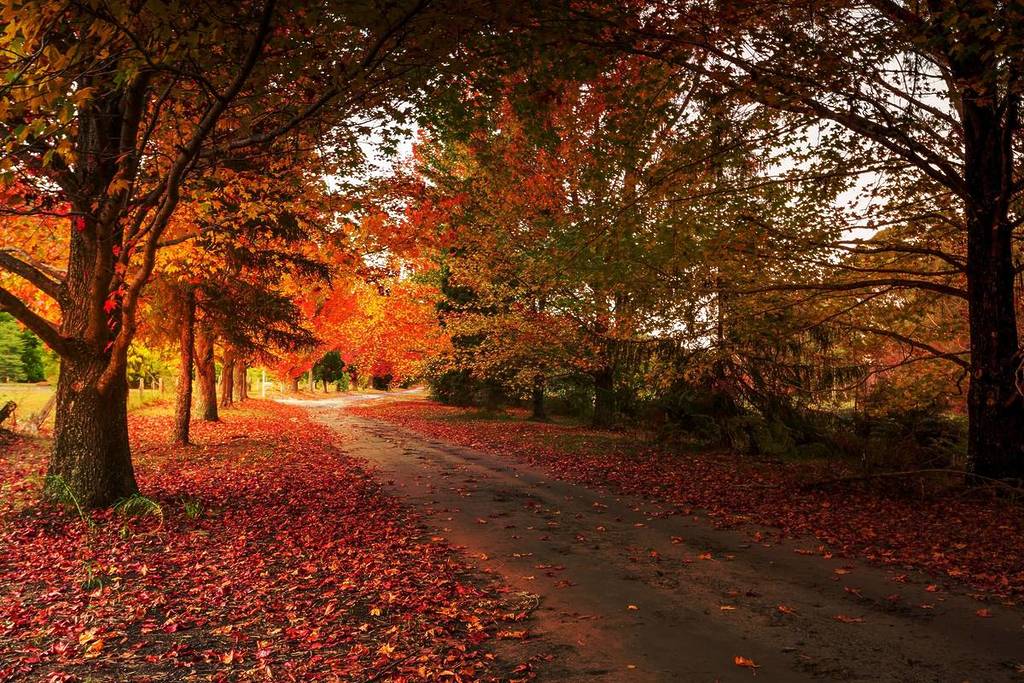
If it’s strictly the autumn aesthetic and vibrant colour you’re after, you’ll want to make a beeline for Mount Wilson. Famous for its historic private estates like Breenhold and Bebeah Garden, the area transforms into a canopy of crimson reds, deep oranges, and vivid yellows, making it one of the premier spots in NSW to witness traditional autumn foliage, within easy reach of Sydney.
Key features
- Where: Blue Mountains National Park
- Main access points: Katoomba, Blackheath, Glenbrook, Mount Wilson
- Best for: Walking tracks, lookouts, waterfalls, autumn foliage
- Skill level: Varies significantly; offers everything from wheelchair-accessible lookouts to challenging multi-day hikes
- Parking: Available at most major hubs; can fill early on weekends and public holidays
- Entry fee: Free to enter most areas, though a $8 per vehicle day pass applies in the Glenbrook area
- Best time to visit: March to May for cooler conditions and autumn colour, especially around Mount Wilson and Blackheath
- Seasonal notes: Autumn brings milder temperatures suited to longer walks, with peak foliage typically falling between April and early May
Plan your trip and find more information about the Blue Mountains National Park on NSW National Parks and Wildlife Service.
Getting there
The park is accessible year-round, but the window between March and May is arguably the sweet spot for bushwalking, without the summer humidity or winter chill. It’s conveniently located around a 90-minute drive from Sydney via the M4, or roughly 2 hours by train from Central to Katoomba. If you’re heading to Mount Wilson for autumn foliage, a car is essential. For other areas, trains run regularly from Central along the Blue Mountains line, with stops including Parramatta and Penrith. Plan your travels on Transport for NSW.