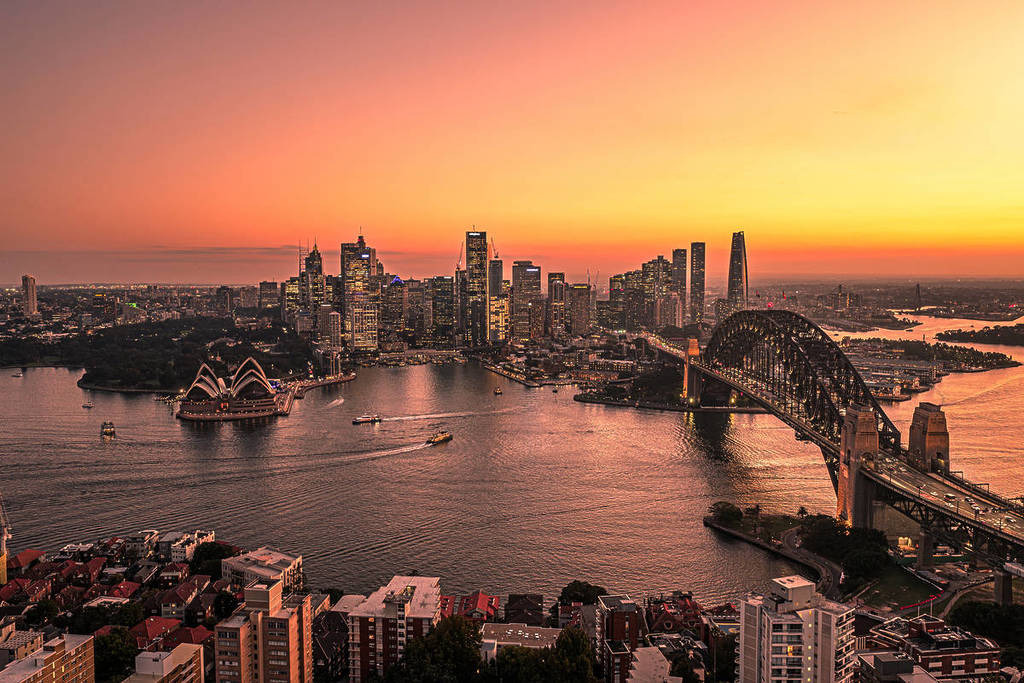

If it feels like the sun has been disappearing a little earlier each day, you’re not imagining it. This weekend, NSW will experience its shortest day and longest night of the year as the winter solstice arrives across the Southern Hemisphere. For Sydneysiders, that means less than 10 hours of daylight on Sunday, with sunset arriving before 5pm. Although the solstice marks the darkest point of the season, it also marks a turning point, with daylight hours gradually beginning to increase from the following day. Here’s what to know about the 2026 winter solstice and what it means for NSW and other Australian states.
When is the winter solstice in NSW?
The 2026 winter solstice will take place on Sunday, June 21, marking the point at which the Southern Hemisphere is tilted furthest away from the sun. In Sydney, the sun is expected to rise at 6.59am and set at 4.53pm, resulting in just under 10 hours of daylight. Canberra will see slightly shorter daylight hours, while Hobart will experience the shortest day of any Australian capital city, with only around nine hours between sunrise and sunset. At the other end of the scale, Darwin will enjoy more than 11 hours of daylight thanks to its position closer to the equator.
The winter solstice occurs because Earth’s axis is tilted, causing the Southern Hemisphere to lean furthest away from the sun at this point in its annual orbit. As a result, the sun takes its lowest path across the sky, spending less time above the horizon than at any other point during the year. While many people associate the solstice with the start of winter, meteorological winter actually began on June 1 in Australia. The solstice instead marks the beginning of astronomical winter and has long been recognised as a significant seasonal event in cultures around the world.
Winter solstice daylight hours around Australia
- Sydney: 6.59am – 4.53pm (9 hr 53 min)
- Canberra: 7.11am – 4.58pm (9 hr 46 min)
- Melbourne: 7.35am – 5.08pm (9 hr 32 min)
- Hobart: 7.41am – 4.42pm (9 hr 00 min)
- Brisbane: 6.37am – 5.01pm (10 hr 24 min)
- Adelaide: 7.23am – 5.11pm (9 hr 48 min)
- Perth: 7.16am – 5.20pm (10 hr 03 min)
- Darwin: 7.06am – 6.30pm (11 hr 23 min)
Following Sunday’s solstice, daylight hours will begin increasing across Australia, continuing until the summer solstice on Tuesday, December 22 when the Southern Hemisphere experiences its longest day of the year. For more information about the winter solstice, including sunrise and sunset times in your area, visit Time and Date.