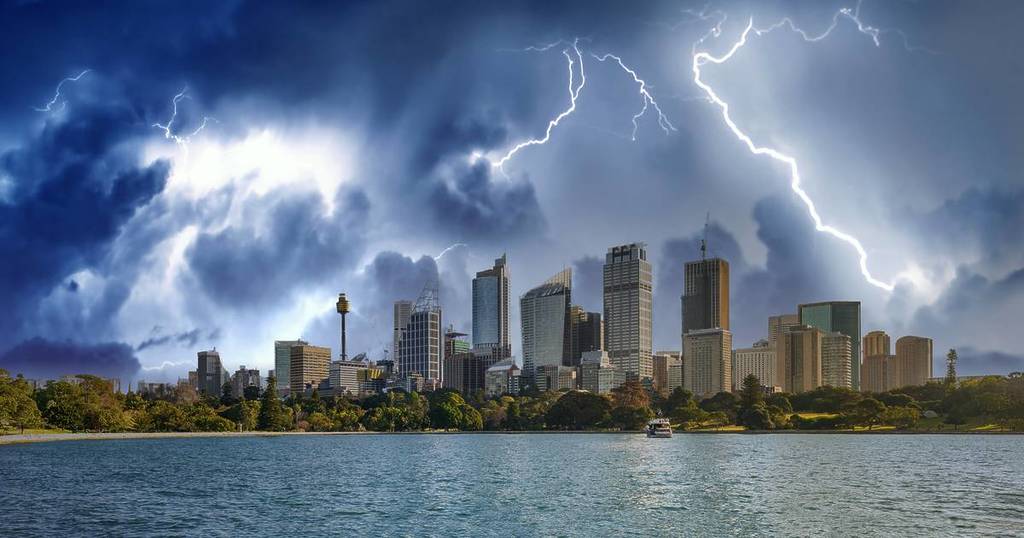

An unusually powerful storm system that has already battered Western Australia is now moving towards southeastern Australia, with parts of NSW set to feel its effects over the coming days. After forecasts predicted fresh snowfall across the state’s alpine regions ahead of the King’s Birthday Long Weekend, forecasters are now warning the same weather system could also bring damaging winds, heavy rain and blizzard-like hazardous conditions to parts of NSW. The cold front is set to deliver a sharp early-winter blast as the system shifts east across the country. Here’s everything you need to know about the wild weather forecast this week.
Damaging winds and heavy rain forecast across NSW
The system is expected to arrive during the first half of the week, with several regions across NSW likely to experience a burst of wild winter weather. According to Weatherzone, damaging wind gusts are expected to develop along much of the Great Dividing Range, extending from the Snowy Mountains through to the Northern Tablelands. The strongest conditions are forecast across the alpine region, where wind gusts above 100km/h are possible.
The weather system has already caused widespread disruption in Western Australia and is currently impacting parts of South Australia. As it continues moving east, NSW is expected to experience a combination of strong winds, colder temperatures and periods of rain, particularly across elevated areas and the state’s south.
Alpine regions could see blizzard conditions
Forecasters are also monitoring conditions in the NSW Alps, where snowfall and powerful gusts could combine to create blizzard-like conditions at higher elevations. The Bureau of Meteorology has warned that exposed alpine areas could experience some of the harshest weather associated with the system, particularly above 1900 metres. The deteriorating conditions come just days before the King’s Birthday Long Weekend, when thousands of visitors are expected to head to the Snowy Mountains for the start of the ski season.
Residents are being encouraged to monitor the latest updates on the Bureau of Meteorology Twitter page, Weatherzone and local emergency services before heading out.