NSW is home to some spectacular places to watch the night sky, and one has now earned recognition on a global scale. Warrumbungle National Park, a wild and wonderful stretch of wilderness near Coonabarabran, has been ranked the second-best stargazing destination in the world in the 2026 Clean Sky Index. The national park beat internationally renowned astronomy hotspots in Chile, Hawaii and New Zealand, ranking second only to France’s Pic du Midi. Already famous among astronomy enthusiasts as Australia’s first Dark Sky Park, the Warrumbungles offer exceptionally dark skies far removed from the glow of major cities, along with dramatic landscapes worth exploring during daylight hours.
Rounding out the top five were Grasslands National Park in Canada, Namibia’s NamibRand Nature Reserve and AlUla in Saudi Arabia. Other famous stargazing destinations in the top 10 included Chile’s Atacama Desert, La Palma in Spain, New Zealand’s Aoraki Mackenzie and Hawaii’s Mauna Kea.Here’s why this NSW national park is one of the world’s best places to spend a night under the stars.
Things to do in Warrumbungle National Park

Stargazing might be the highlight, but there’s plenty to do during the day in Warrumbungle National Park. The park’s volcanic landscape is threaded with walking trails winding through forest, rocky gorges and distinctive rock formations. For a serious hike, tackle the Breadknife and Grand High Tops walk, which offers close-up views of the 90-metre-high Breadknife and sweeping panoramas across the surrounding peaks. Shorter options include the Wambelong Nature walking track and the easy walk to Whitegum lookout.
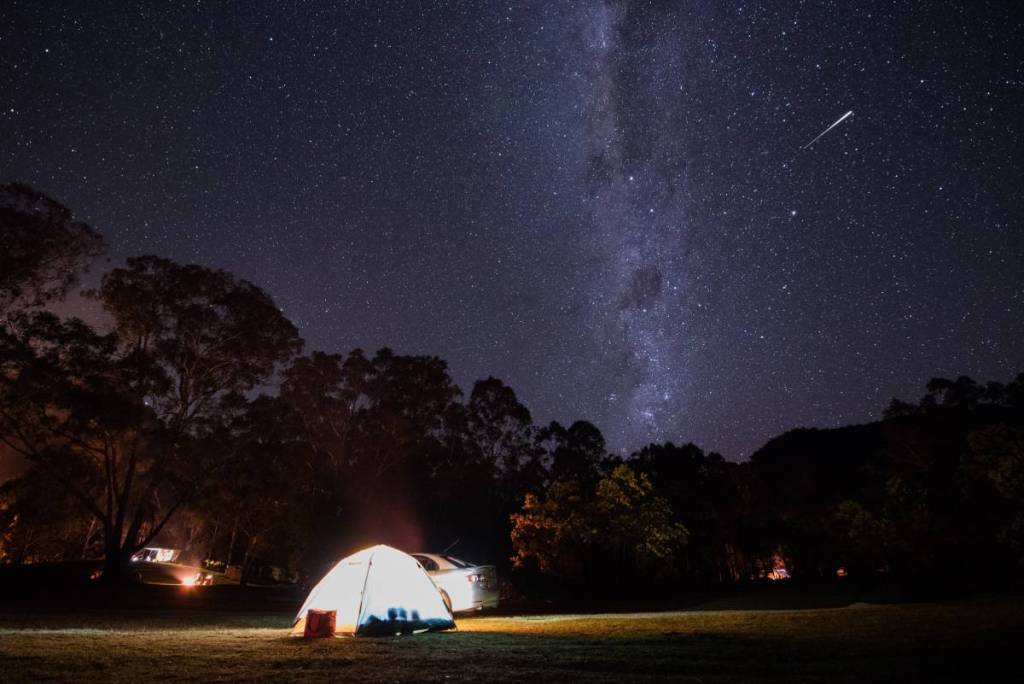
Dark winter skies offer the perfect opportunity to camp in the park, with crisp nights providing an ideal excuse to settle around the campsite before watching the stars emerge. Camp Blackman is a popular option, with hot showers, barbecues and picnic tables on offer, while Balor Hut campground offers a more remote stay if you want to go off-grid beside a historic walkers’ hut. Camp Pincham, Burbie Camp and several other campgrounds provide additional options throughout the park.
Artificial light is deliberately kept to a minimum in the area, and there is no street lighting within the Dark Sky Park. Pick up a star chart from Warrumbungle Visitor Centre before sunset and spend the evening looking for constellations, planets and the Milky Way. For a more guided experience, astronomy tours and observatories can also be found around nearby Coonabarabran, touted as the Astronomy Capital of Australia and home to the renowned Siding Spring Observatory.
Key features
- What: Warrumbungle National Park
- Entry: $8 per vehicle per day; entry is free if you arrive on foot or by bicycle
- Opening hours: The national park is always open, although temporary closures can occur due to weather, fire danger or other conditions
- Parking: Parking is available at Warrumbungle Visitor Centre, with sealed road access suitable for 2WD vehicles
- Best time for stargazing: Aim for a clear, moonless night for the darkest skies. NSW National Parks recommends checking the moon phase and avoiding dates around a full moon if skygazing is your priority
- Winter conditions: Nights can be seriously cold, with temperatures dropping below freezing, so pack plenty of warm layers if you’re staying after dark
- Visitor centre: Open daily from 9am to 4pm, except Christmas Day
Find more information on NSW National Parks and Wildlife Service.
Getting there
Warrumbungle National Park is around a 6-hour drive from Sydney, and around 35km from Coonabarabran. From Coonabarabran, follow Timor Road and John Renshaw Parkway directly towards the park. Public transport is more complicated, but train and coach connections are available from Sydney to Coonabarabran, including routes via Lithgow or Dubbo. From there, you’ll need to arrange transport to the national park, so driving remains the easiest option for exploring the area. Plan your travels on Transport for NSW.