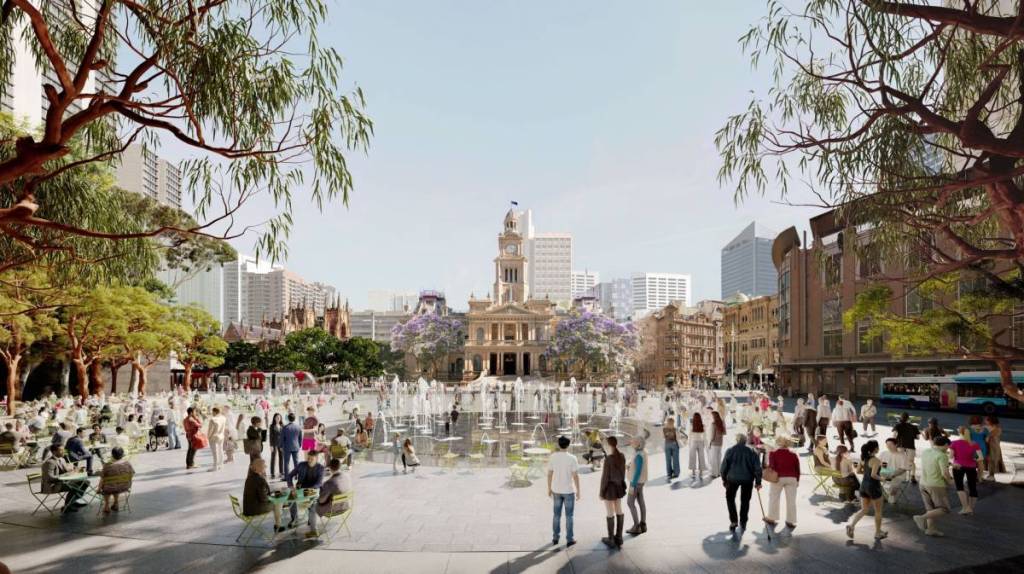

Sydney Town Hall is set to gain a new civic square, with the City of Sydney releasing designs for a major public space across the road.
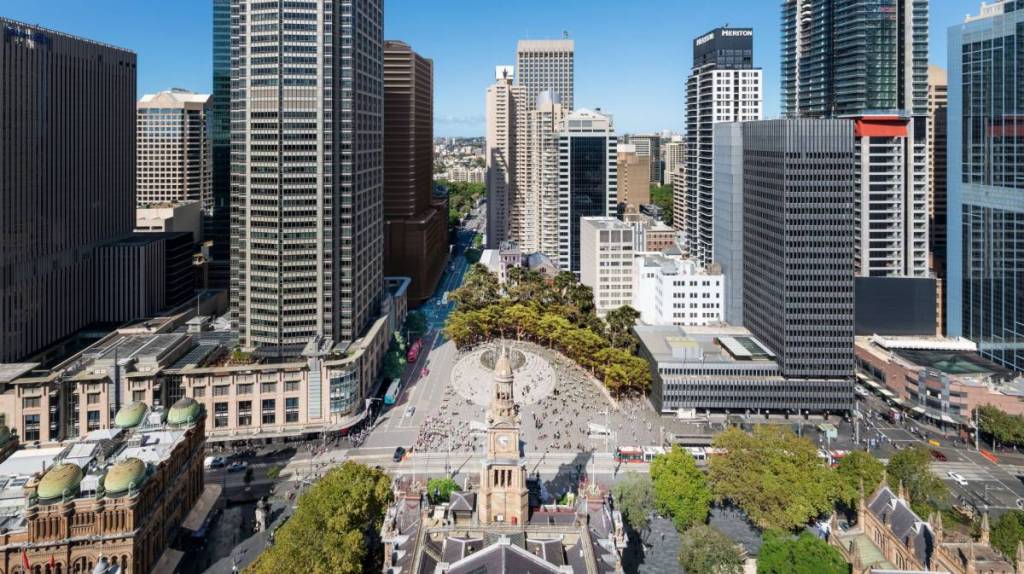
The proposed square will create more than 4,500m² of accessible open space between George, Pitt and Park streets. The space will provide a new place for everyday gatherings, cultural events and large-scale celebrations in the heart of the CBD.
A civic space for a growing city
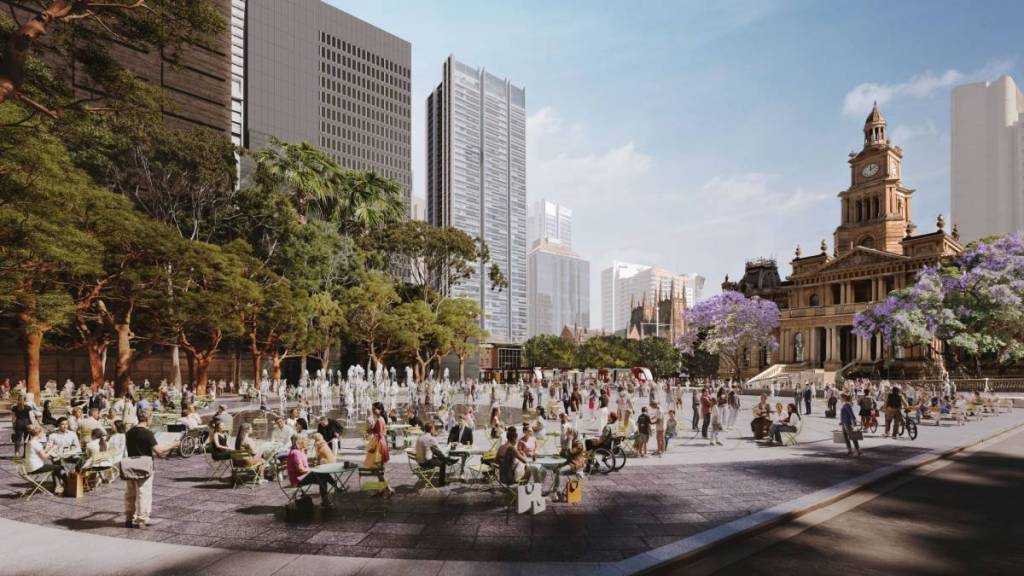
The design places a circular water feature and paving pattern at the centre of the plaza, with a curved grove of more than 30 native Australian trees framing the space.
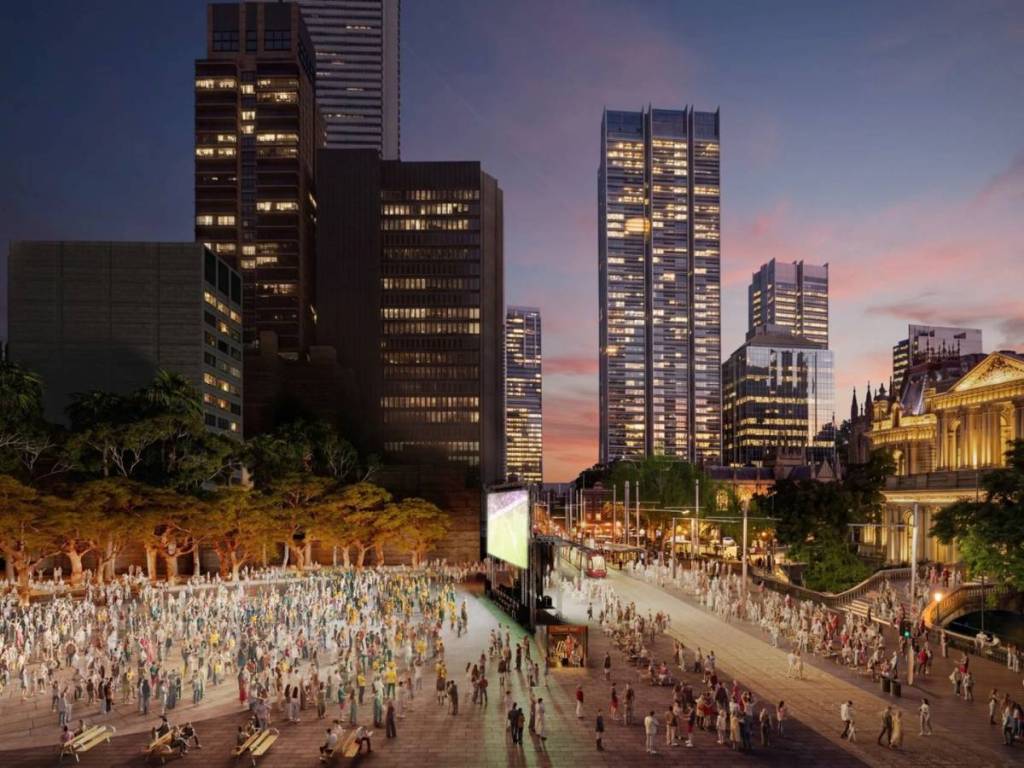
Shaded seating, fixed and movable chairs, tables, creative lighting and event infrastructure will allow the square to shift between a relaxed meeting place and an outdoor venue for markets, festivals, concerts and live sporting events.
Moreover, Lord Mayor Clover Moore AO said the project would give Sydney a much-needed civic gathering place as the city centre continues to grow. “Like other major cities around the world, we need large, lively, welcoming civic spaces for the growing number of people living in and visiting Sydney,” she said.
The city records as many as two million people to spend time in the CBD each day by 2050—almost twice the current number. Around 190,000 people already move through the Town Hall transport precinct daily via train, metro, bus and light rail.
“A new square at Town Hall will provide people with much-needed space to move between transport modes and a welcoming city entrance, in what is one of the busiest parts of the CBD,” Moore said.
Designed for day and night
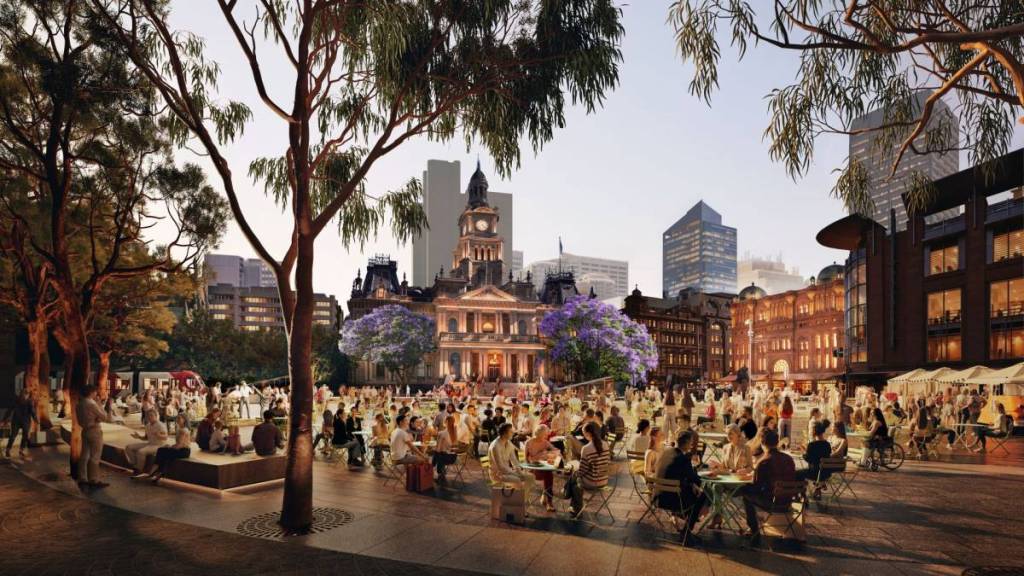
JPW is leading the project’s architecture and design, with ASPECT Studios overseeing the landscape architecture. The design will open up views towards Sydney Town Hall, the Queen Victoria Building and St Andrew’s Cathedral, while connecting the new plaza with George Street, Sydney Square and the surrounding heritage buildings.
Moreover, ASPECT Studios Global Design Director Sacha Coles said the trees, water and lighting would help the square remain comfortable and welcoming throughout the year. “A grove of native trees will provide shade and softness in a warming climate, generous seating will invite people to linger, and cool moving water brings movement and a sense of delight,” Coles said. “The tree canopy will light up and ensure the square is safe and welcoming.”
JPW Director Matthew Morel said the space would support both major public events and quieter daily moments. “The square will provide generous, flexible civic space found in the world’s great cities,” Morel said.
More than 40 years in the making
The proposal follows decades of planning and property acquisition. The City began purchasing properties on the site in 1985, after Council supported plans in 1982 to create a new square opposite Town Hall.
The project forms part of the City’s long-term plan for three public squares connected by a pedestrian-friendly George Street. It also follows the revitalisation of George Street, which the city says has attracted more than $8 billion in private development.
Council has allocated $150 million to the square’s design, demolition and construction, with the project funded through the City’s long-term financial plans. “Sound financial management over the last two decades has helped us provide high-quality services alongside an ambitious, multibillion-dollar local capital works program,” Moore said.
The City plans to give the square a First Nations name using a local Aboriginal word, in line with its naming policy. It is also developing opportunities to recognise and practise First Nations cultures within the space.
The new square will sit on Gadigal Country, near the catchment of the Tank Stream. The City says it will continue developing the public art and Country-responsive elements of the design.
The project will require the removal of seven buildings on the site, none of which are heritage-listed, as most businesses are expected to relocate to alternative premises.
When will the square open?
The city expects to lodge a development application in the coming months, with public feedback on the design planned for late 2026. Demolition could begin in 2028, with construction scheduled to finish in 2031.
Also, the city will also upgrade the area between Sydney Town Hall and St Andrew’s Cathedral from next year, adding new paving, seating and lighting. The works are intended to connect Sydney Square, the new Town Hall square and the George Street pedestrian areas into one larger civic precinct.
Margy Osmond, CEO of the Tourism & Transport Forum, said the project could bring more visitors and investment to the city centre. “This is fantastic for Sydney’s visitor economy and a once in a generation opportunity to create a new landmark in the heart of the city,” Osmond said.