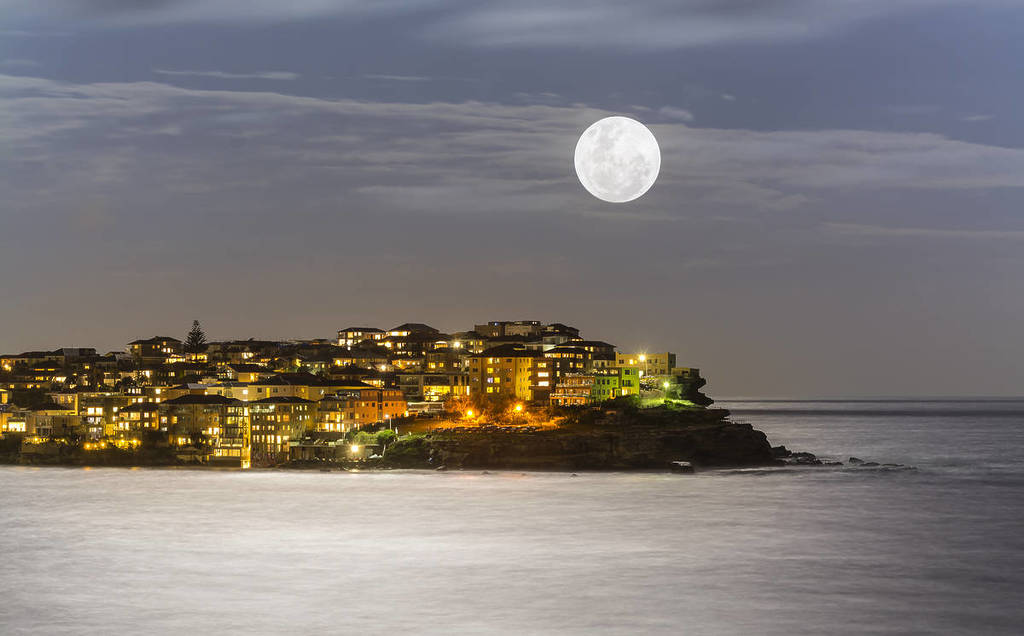
The full Snow Moon will be visible in Australian skies this weekend, marking the second full moon of the year. Despite its wintry name, the Snow Moon comes from the Northern Hemisphere, where February is typically the snowiest month, and has no real connection to the warm summer conditions here. For Australians, it’s simply a brighter-than-usual full moon that’s easy to spot from most locations. The moon will appear full across more than one night, giving sky-watchers a longer window to see it at its brightest. Here’s when and how to see it.
When can you see the Snow Moon in Australia?
The Snow Moon reaches peak fullness in Australia on Monday, February 2, at 9:09am AEDT. Because that happens during the day, it won’t be visible at the exact moment it peaks. The best chance to see it will be on the evening of February 2, when the moon will appear full and bright in the night sky.
This is because a full moon looks almost identical for more than one night, as it moves gradually through its orbit. For the best viewing, look towards the eastern horizon after sunset, when the moon rises into the evening sky and becomes more prominent as the night goes on.
Why is it called the Snow Moon?
Full moons were often named as a way of marking the seasons before modern calendars existed. The Snow Moon refers to February’s full moon in the Northern Hemisphere, which is typically one of the coldest and snowiest months of the year. February’s full moon is also known by other names in different cultures. Some Indigenous groups in North America referred to it as the Hunger Moon, describing a period when food supplies were often scarce.
How to see the Snow Moon
You don’t need any special equipment to see the Snow Moon. It will be visible to the naked eye from most locations, as long as you have a clear view of the sky. For the best experience, try to get away from bright city lights and find an open area with minimal light pollution. An elevated lookout, headland, beach or park can improve visibility, particularly after sunset. Some dark sky locations to consider include the Southern Hemisphere’s first-ever Urban Night Sky Place right here in Sydney, the Blue Mountains, the incredible Warrumbungle National Park further away and the town of Coonabarabran.
Read more about the February full moon here.