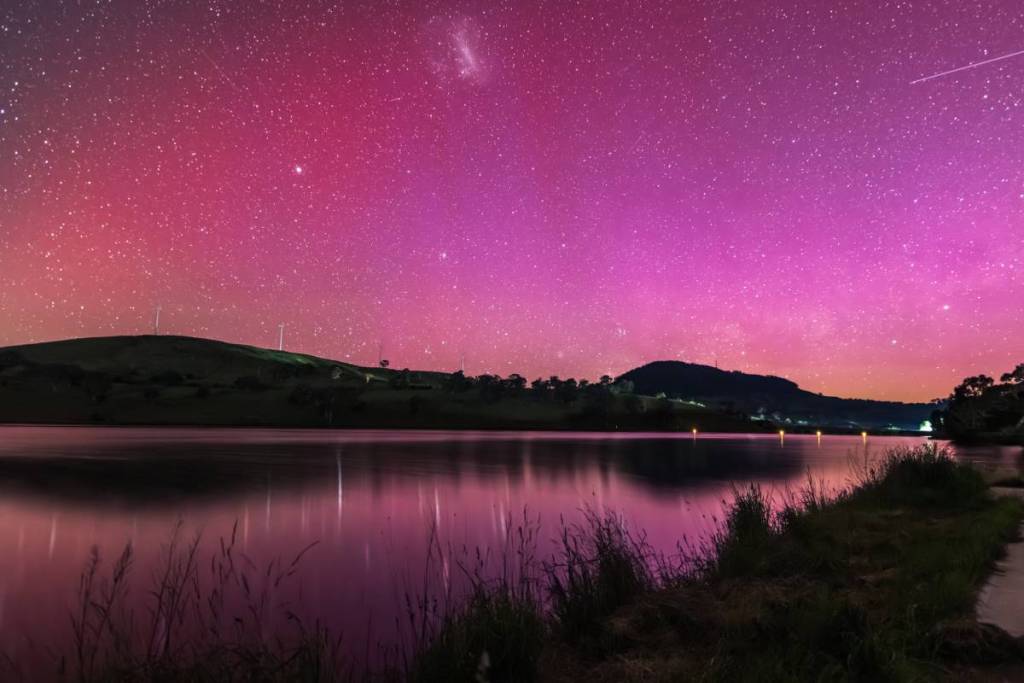

It has already been a busy few weeks for skywatchers, with meteor showers, a Strawberry Moon and the possibility of Southern Lights all putting on a show across Australia. Now, another opportunity could be unfolding tonight after an official Aurora Alert was issued by the Australian Space Weather Forecasting Centre, confirming a major geomagnetic storm is in progress. While the strongest displays are expected further south, parts of NSW could also have a chance of catching the Aurora Australis if conditions remain favourable. If you’re thinking of heading out after dark, here’s what you need to know and where you’ll have the best chance of seeing it in NSW.
Could the Aurora Australis be visible in NSW?
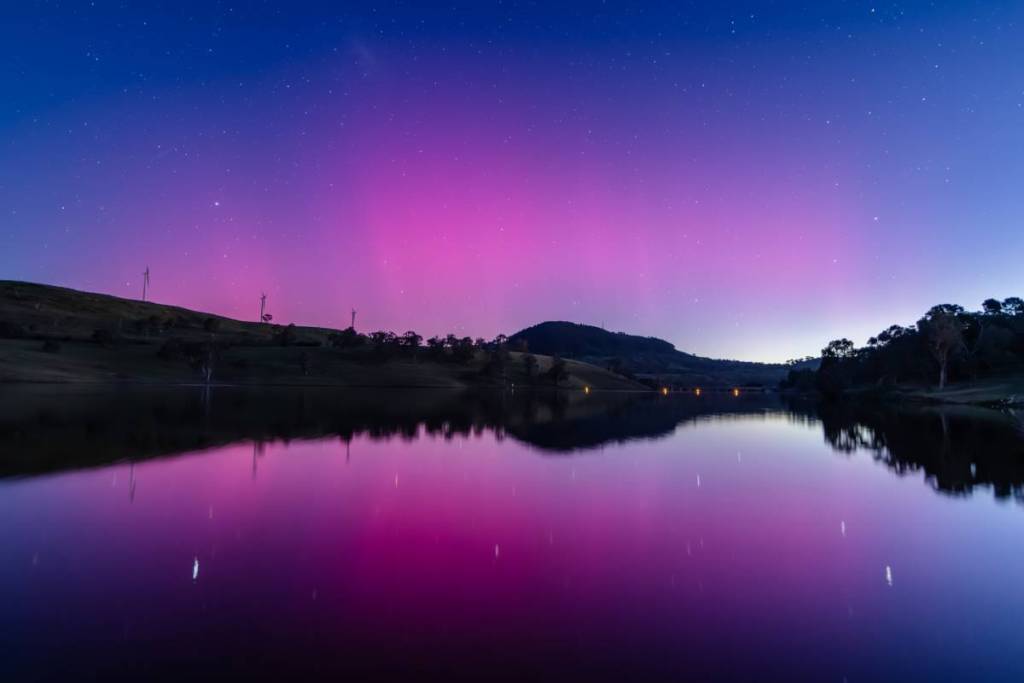
The aurora alert has been issued after geomagnetic activity reached levels capable of producing visible auroras across southern Australia. While Tasmania and Victoria are expected to offer the best viewing opportunities, the latest forecast indicates the auroral oval could extend far enough north for parts of southern NSW to catch a glimpse if skies remain clear and the storm maintains its strength.
According to the alert, the best chance of seeing the Southern Lights will be from dark-sky locations with an unobstructed view of the southern horizon on Saturday, July 4, particularly after dusk and into the early hours of Sunday morning. As with any aurora event, visibility will depend on a combination of cloud cover, light pollution and how the geomagnetic storm develops throughout the night.
Best places to see the Southern Lights in NSW
For the best chance of spotting the aurora, head as far south as possible and choose a location with minimal light pollution and a clear view of the southern horizon. Coastal areas such as Green Cape, Eden, Tathra, Broulee and Jervis Bay are among the state’s most popular aurora viewing locations, while inland dark-sky destinations including the Warrumbungle region can also provide excellent viewing conditions under clear skies.
If you’re staying in Sydney, your chances are much lower, but darker locations away from the city’s bright lights, such as the Royal National Park and the Southern Hemisphere’s first-ever urban night sky place, may offer an opportunity if the geomagnetic storm strengthens. Smartphone cameras using night mode or long-exposure settings can often capture colours that are difficult to see with the naked eye.
For the latest updates, keep an eye on the Australian Space Weather Forecasting Centre website and follow the Aurora Australis Facebook page, as aurora forecasts can change quickly as conditions evolve.