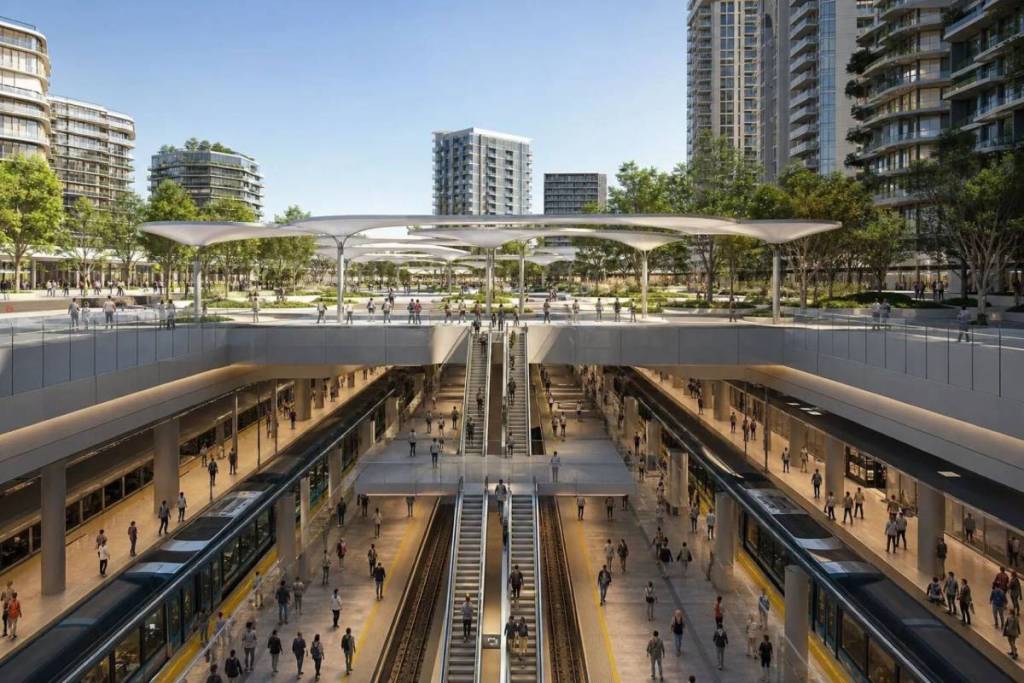

Sydney Olympic Park will soon welcome a $780 million metro station designed to move massive crowds through Australia’s biggest sports and entertainment precinct.
The NSW Government has released the first concept images of the new station alongside the construction contract award, offering a first look at the cavernous interchange planned for the heart of Olympic Park.
The station will be the only four-platform station on Sydney’s expanding metro network, with wider walkways, additional escalators and a special “event mode” designed to handle the enormous surges of people that arrive for sold-out concerts, sporting matches and major events.
What’s coming to the Sydney Olympic Park Metro
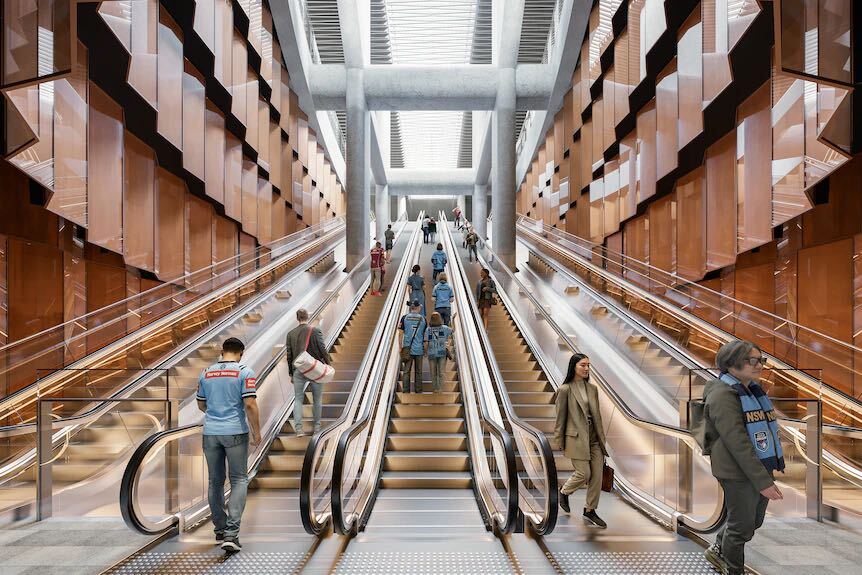
During peak periods, the new station will be able to move around 25,000 passengers an hour. The station’s unusual four-platform design will let operators activate the outer platforms during major events, separating arriving passengers from those waiting to board trains.
That capacity will sit alongside the existing Olympic Park heavy rail station, which can accommodate another 40,000 passengers an hour.
The new station will be located south of the existing Olympic Park Station, east of Olympic Boulevard, with entrances planned between Herb Elliot Avenue and Figtree Drive and off Dawn Fraser Avenue.
It will also provide connections to the planned Parramatta Light Rail, the T7 Olympic Park Line and local buses.
Transport Minister John Graham says the station will change the way people experience the precinct on its busiest nights. “Sydney Olympic Park is already the most exciting sports and entertainment precinct in the country, this metro station will take it to a whole new level,” he said.
“On those magic Sydney nights where the stadium and the arenas are sold out, fans will have peace of mind that Metro West will get them home with ease.”
The new station is built for Sydney’s biggest crowds
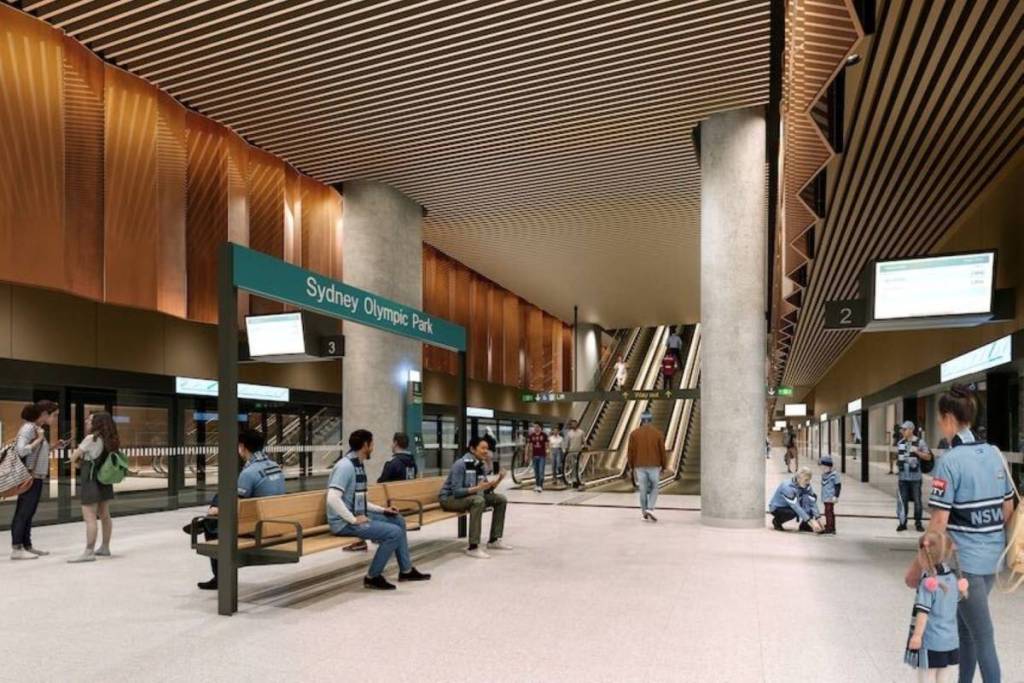
Anyone who has tried to leave a packed stadium or arena at the same time as tens of thousands of other people will understand the appeal.
The government hopes the new station will make it easier for visitors to hang around in Olympic Park after an event instead of immediately joining the rush for the train.
“The metro precinct will mean fans will want to stick around after the match, rather than rushing for the gates before full time,” Graham said.
The project has also won support from Business Western Sydney executive director David Borger, who said the four-platform design would help deal with “massive crowd surges” during major events.
“At the moment, we know that the loop train line that was built for the Olympics is challenging, people have to interchange at Lidcombe,” he said. “This is going to improve access for major sporting events.”
During peak periods, the new station will be able to move around 25,000 passengers an hour, with wider walkways and extra escalators helping keep crowds moving. Its unusual side-island-side configuration will allow operators to activate the outer platforms during major events, separating arriving passengers from those waiting to board trains and switching the station into “event mode” when crowds surge.
The precinct beyond the station
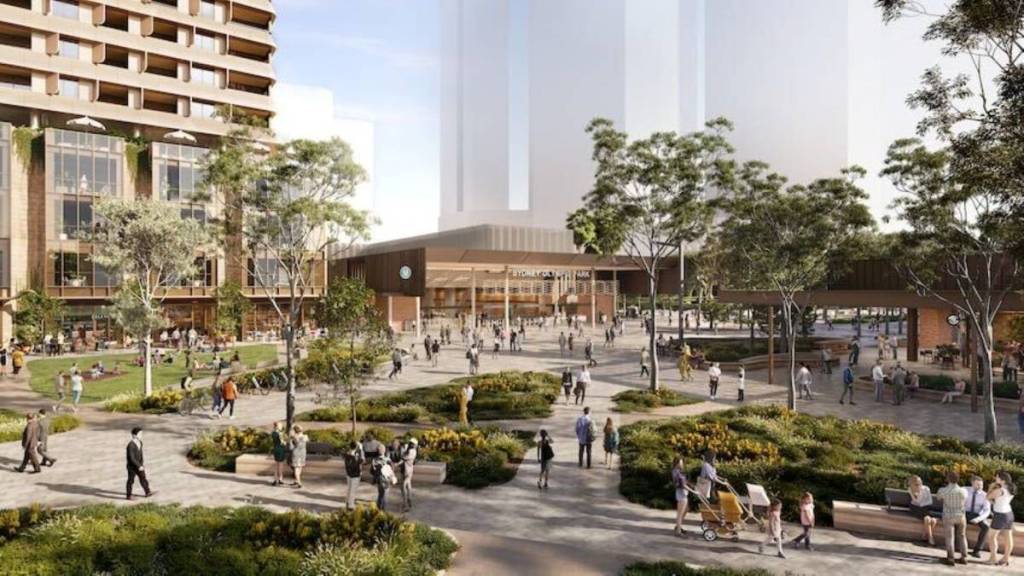
The station will sit at the centre of a new mixed-use precinct featuring shops, offices, homes and a new public plaza where visitors can gather before and after events. Developers will also build around 500 new apartments across two residential towers beside the station, rising 42 and 32 storeys.
The design will also draw on Olympic Park’s history and natural surroundings, with materials and lighting inspired by the Olympic cauldron and nearby mangrove landscapes.
“This isn’t just a train station, it’s the heart of a new precinct with homes, shops, offices, events and public spaces,” Planning and Public Spaces Minister Paul Scully said.
“Around 500 new apartments will sit right next to the station, and the design draws on the site’s Olympic history and natural surrounds, with the cauldron and mangroves both reflected in the station’s materials and lighting.”
Sydney Olympic Park attracts more than 10 million visitors and residents each year, but the government says limited transport connections have held the precinct back.
Borger said the metro could dramatically expand the number of jobs accessible within a half-hour commute for people living in the area, from around 70,000 today to more than 800,000.
When will Sydney Olympic Park Metro open?
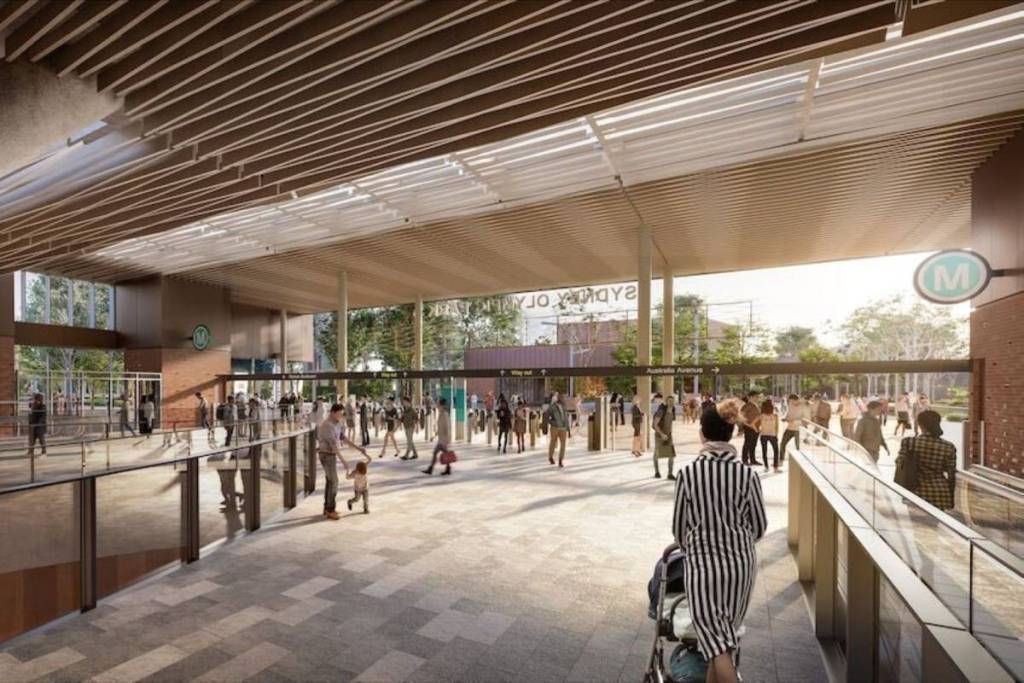
The NSW Government has awarded the Sydney Olympic Park Integrated Station Development Precinct package to FCC Construction Australia and Ecove Group, who will deliver the station, surrounding public spaces and neighbouring developments.
The government expects construction to begin in mid-2027 and aims to open Metro West in 2032.
The wider Metro West project will connect Sydney CBD with Westmead, stopping at Pyrmont, The Bays, Five Dock, Burwood North, North Strathfield, Sydney Olympic Park and Parramatta.
The final proposal will still need to go through a Detailed State Significant Development Application, giving the community an opportunity to provide feedback.
For Olympic Park, though, the vision is a cavernous four-platform station capable of swallowing huge event crowds, surrounded by homes, shops, offices and public space. And if the government gets it right, those famous “magic Sydney nights” won’t have to end with a frenzied dash for the train.